Grinding a sweetgum stump is not like grinding anything else
The one homeowners regret, and the one case where grinding the stump alone does not end the problem.
Free quotes, usually the same day. Tell us what you are looking at and we pass it straight to a local crew.
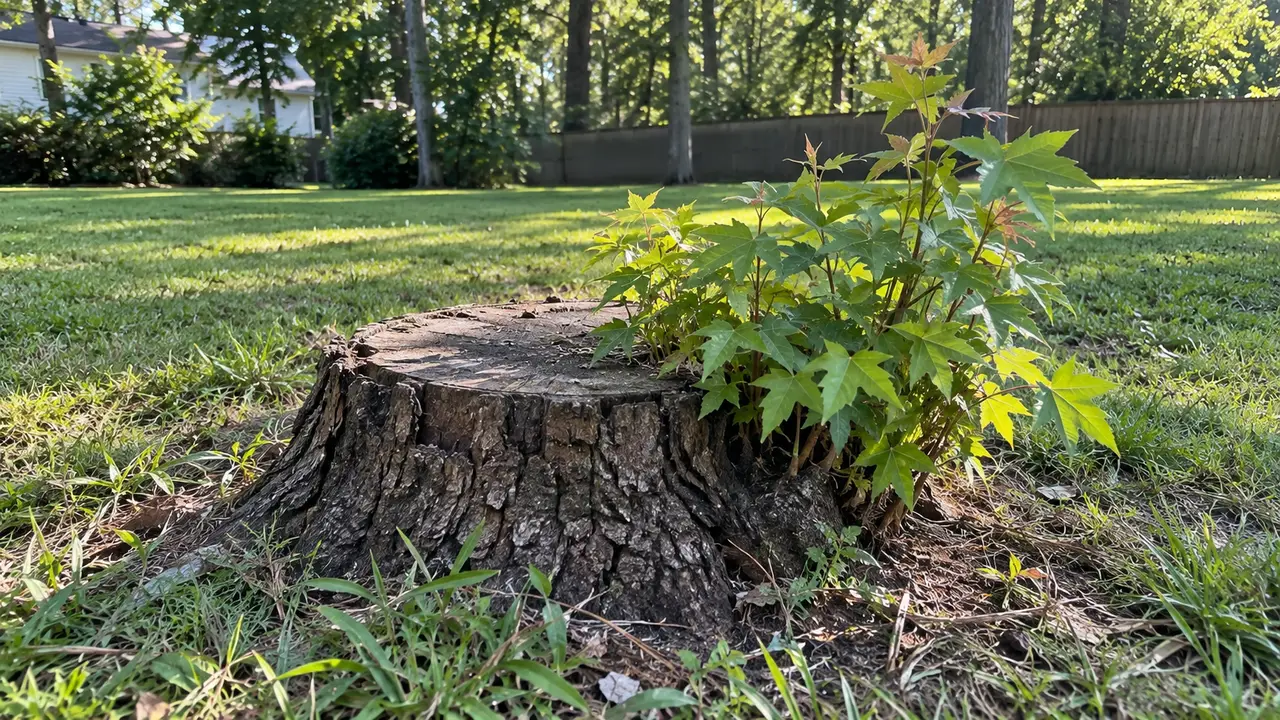
Liquidambar styraciflua
Sweetgum is the tree that drops the spiked gumballs across your lawn every fall, which is why so many of them get removed. It is also the species where a standard grind leaves you with a new problem in the spring.
Sweetgum throws surface roots well beyond the drip line, and those roots will keep sending up suckers after the stump is gone. People grind a sweetgum, put grass over it, and find a dozen little sweetgums coming up across the yard the following season.
The fix is root chasing: the crew follows the major runners out from the stump and grinds them where they surface. It is priced separately because it is a separate operation, and it is far cheaper done in the same visit than as a callback.
If the tree came down before you moved in and nobody told you what it was, the ground will. Sweetgum leaves litter the area as five-pointed stars, and the spiked gumballs sit in the beds and the gutters for years after the tree is gone. Grey, deeply furrowed bark on the remaining stump is the other tell.
Timing is worth a thought here in a way it is not for other species. Roots push hardest in early spring, so grinding and chasing in late winter gets ahead of the season rather than chasing shoots that have already started.
If your tree was a sweetgum, say the word on the phone. It changes what you should be quoted and most homeowners do not know to ask.
What it costs
Species changes the time on site more than the price list does. The local market range, and what moves a quote, is on the Woodstock stump grinding cost guide.
How the visit itself goes, from the phone call to raking the chips back into the hole, is on the stump grinding in Woodstock, GA page.
Other trees we get asked about
Stump services
Common questions
Will the gumballs stop once the stump is ground?
The tree is gone, so it stops fruiting. What can come back is the suckers: shoots from surviving surface roots grow into new sweetgums, and given enough years those fruit too. Root chasing in the same visit is what actually ends it.
How do I measure my stump?
Measure straight across the widest point at ground level, including the flare, not the trunk higher up. People routinely underestimate by six or eight inches because they measure the wrong place, then get a quote that feels high.
How deep does the grinding go?
Four to six inches below grade is standard, which is enough to fill with topsoil and grow grass. If you are setting a fence post, pouring concrete or laying sod, ask for twelve inches or more and say what is going in that spot.
Will the crew fit into my back yard?
A standard walk-behind grinder needs roughly thirty six inches of clearance. Measure your gate before you call. If it is narrower, the crew brings a smaller machine or hand-clears a path, and that changes the price more than stump size does.
Free quotes, usually the same day. Tell us what you are looking at and we pass it straight to a local crew.